
The Complete Accounting Course
A Full Sets Accounting,
First Entry To Year End
Seventeen modules on the software Malaysian businesses actually run — taught in Puchong by accountants who keep books for their own clients.
Who It Is For
Why You Need The Complete Course
Three kinds of people sit in this classroom. What they have in common is a gap between the accounting they know and the accounting a working business asks them to produce.
- 01
Professionals
Accountants and auditors who want the whole set of books in their hands — opening balances through to year end — rather than the slice of it their current role happens to cover.
- 02
University & College Leavers
Graduates looking for work who hold the qualification but have not yet taken a full set of accounts from first entry to finished statements on their own.
- 03
Office & Administrative Staff
Private-sector and government staff working in office administration, who already handle the paperwork and now want to understand the books sitting behind it.
Taught On
Sage UBS
In The Classroom
Learned On The Software You Will Be Handed At Work
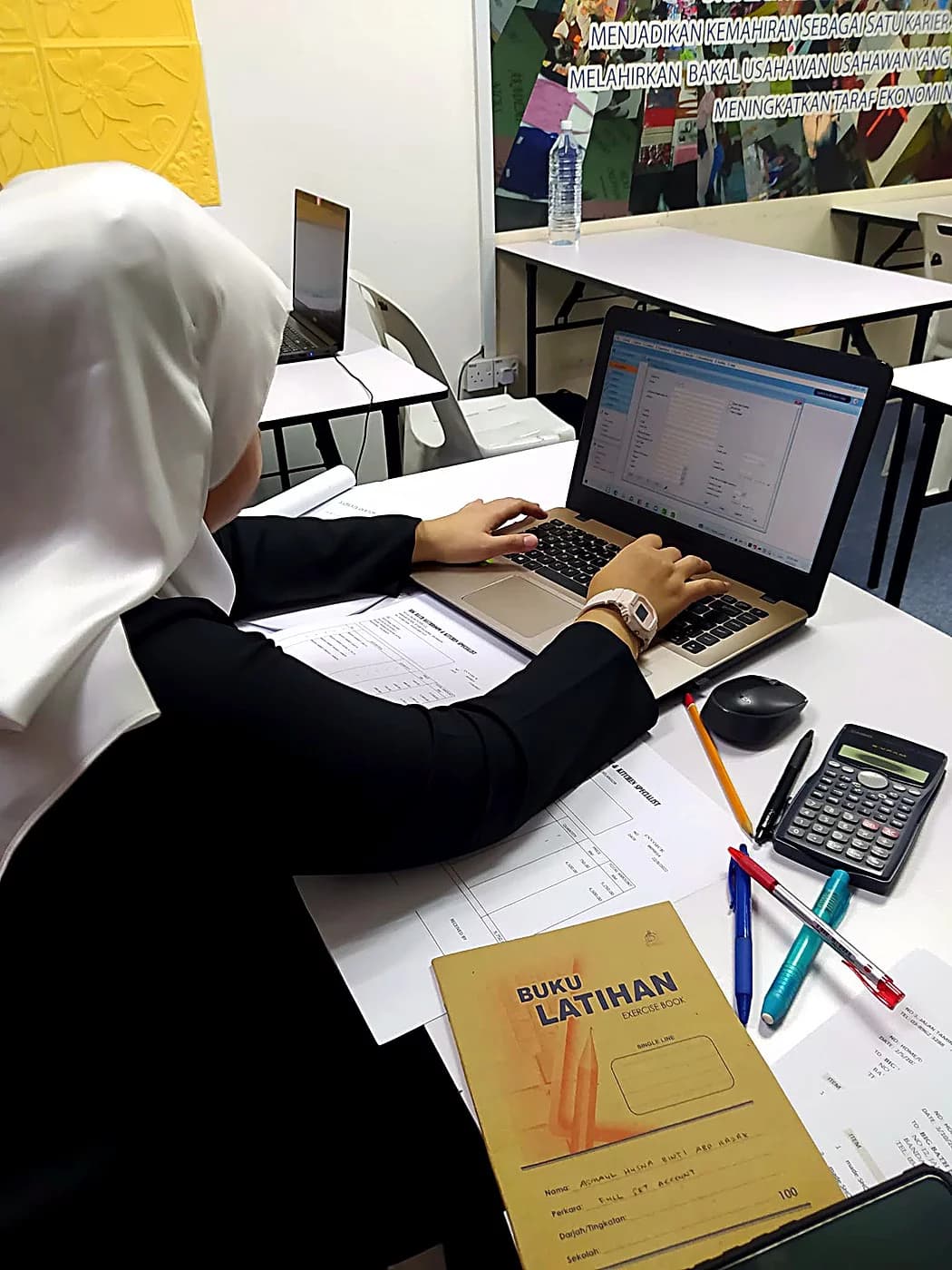
The course runs on Sage UBS, and you work a company file rather than a worksheet — setting it up, posting to it, correcting it, closing it, and taking it through to year end the way a real set of books moves through a year.
Tax computation is part of the syllabus, so the figures you post are followed all the way to the number that gets filed. Tutorials are conducted in Bahasa Malaysia, which keeps the explanations plain for students who would rather learn the concepts in the language they think in.
- Software
- Sage UBS
- Tutorials
- Bahasa Malaysia
- Includes
- GST computation
What You Will Cover
Seventeen Modules, In Teaching Order
The syllabus runs in the order a real financial year does. Nothing is taught out of sequence, so each module lands on the one before it.
- 01Company set-up — accounting period and starting period
- 02Journals — how to add or generate monthly batches
- 03General ledger maintenance — chart of accounts
- 04Account numbers and special account codes
- 05Debtors and creditors ledger, debtors and creditors ageing
- 06Entering opening balances
- 07Maintaining stock values — opening stock and closing stock
- 08Transactions — quick (double) entry and add (single) entry
- 09How to edit, V-edit and delete unwanted transactions
- 10Viewing and printing reports — trial balance, P&L, balance sheet
- 11Debtors and creditors statements, transactions, ageing and analysis
- 12Printing cheques, official receipts and payment vouchers
- 13Security settings — PIN number and user-defined password protection
- 14Locked batches, month-end processing and viewing the audit trail
- 15Bank reconciliation
- 16Backup and restore data
- 17Year-end processing
Next Intake
Tell Us Where You Are Starting From
Fees, the class schedule and the full syllabus are shared on request. Send us your background and we will tell you honestly whether to begin here or somewhere earlier.